
- English
- Español
- Português
- русский
- Français
- 日本語
- Deutsch
- tiếng Việt
- Italiano
- Nederlands
- ภาษาไทย
- Polski
- 한국어
- Svenska
- magyar
- Malay
- বাংলা ভাষার
- Dansk
- Suomi
- हिन्दी
- Pilipino
- Türkçe
- Gaeilge
- العربية
- Indonesia
- Norsk
- تمل
- český
- ελληνικά
- український
- Javanese
- فارسی
- தமிழ்
- తెలుగు
- नेपाली
- Burmese
- български
- ລາວ
- Latine
- Қазақша
- Euskal
- Azərbaycan
- Slovenský jazyk
- Македонски
- Lietuvos
- Eesti Keel
- Română
- Slovenski
- मराठी
- Srpski језик

Bubble Ball Cotton Slippers: How to Pick a Pair That Actually Lasts
Bubble ball cotton slippers have become increasingly popular in recent years. That thick, soft layer you step on really does feel comfortable. But with so many similar-looking options on the market, prices ranging from cheap to premium—what's the real difference?
No brand names. No promotions. Just practical advice on how to choose.
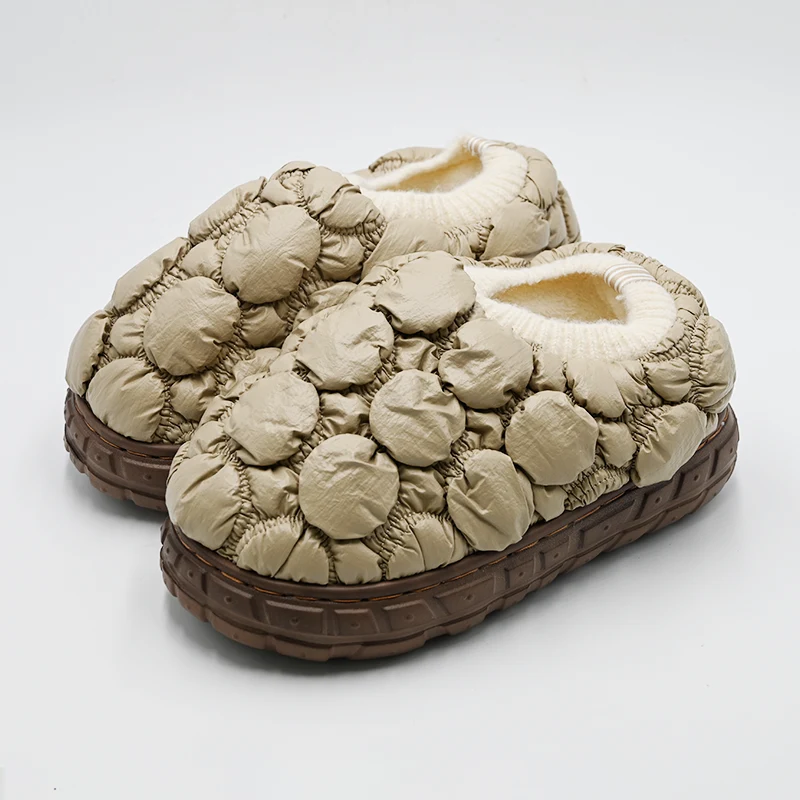
First, Understand What "Bubble Cotton" Actually Is
Many people assume bubble cotton is just regular cotton stuffed a little thicker. It's not.
Real bubble cotton slippers have a layer of high-loft polyester fiberfill sandwiched between the upper and the lining. It rebounds well—you step on it and it slowly springs back, unlike regular cotton which flattens out over time. The soles are typically lightweight EVA or TPR—soft but supportive, not mushy.
The cheap ones that flatten to nothing after two weeks? Those are usually filled with shredded scrap cotton. Avoid them.
Four Things to Check When Buying
1. Sole Thickness and Tread Pattern
Look for soles about 2.5 to 3 cm thick. Too thin and you'll feel the cold floor; too thick and you risk tripping. Flip them over and check the tread—diamond patterns,波浪纹, anything deep and dense works. Flat bottoms with no tread? One drop of water on the floor and you're sliding. Especially dangerous in the bathroom.
2. Press the Insole for Rebound
Press down firmly with your palm, then release. A good bubble cotton insole should slowly spring back within two to three seconds—not instantly, and not stay compressed. That means the fill density is right and it will hold up for months. If it leaves a dent that won't bounce back, that's low-quality fill. Don't buy it.
3. Check How the Upper Attaches to the Sole
The worst thing is when the upper separates from the sole mid-walk. Stitched construction is much more durable than glued-only. If you see a line of visible stitching around the edge of the upper, you're in good shape. For glue-only styles, bend the toe area before buying—if it peels apart easily, the adhesive is weak and will fail even faster in cold weather.
4. Try Them On for Fit
A well-fitting pair should hug your heel comfortably without slipping off, while leaving enough room in front so your toes don't hit the end. If your toes are jammed against the front, don't buy them—you'll slide forward when walking and risk falling.
Material Options
Three common upper materials:
-
Fleece/plush : Warmest option, great for deep winter, but attracts dust and is harder to clean
-
Cotton fabric : Breathable, comfortable for spring and fall, less prone to sweaty feet
-
Knit fabric : Somewhere in between, stretchy, good for people with high insteps
For households with elderly or children, prioritize wider soles for better stability. Seniors should look for firmer, more supportive soles—too soft and they actually require more effort to walk on.
Daily Care
Bubble cotton slippers generally should not be machine washed—the fill will clump up. Spot-clean the surface with a damp cloth. For tougher stains, use a mild neutral detergent locally, then air-dry in the shade. No direct sunlight.
Soles will harden over time with normal wear. That's just aging. Expect to replace them after one season—don't feel bad about it.
Bottom Line
Remember four words: Press, Pinch, Look, Try. Press the sole for rebound. Pinch the fill for quality. Look for stitched construction. Try them on for fit. Get these right and a pair will last you all winter.
Three More Hard-Core Tips
1. How to Read Material Labels
Check the hang tag or box:
- Fill labeled 100% polyester —good loft and rebound. If it says "mixed fibers" or has no label at all, it's probably recycled scraps.
-
Sole material: EVA —light, soft, cheap, good for one season. TPR/rubber —much better grip and durability, safer on wet floors, lasts longer.
-
Insole lining: If it says Ortholite or similar breathable memory foam, it wicks moisture much better than plain cotton. Priority if you have sweaty feet.
2. Common Complaints from Real Users
Based on aggregated feedback, these are the most frequent issues:
-
Bad smell : Pungent chemical odor out of the box means poor-quality glue or fill. If it doesn't air out quickly, it can irritate your skin. Return it.
-
Hard soles : Bend the sole in half. If it won't bend or doesn't spring back, that's low-grade material that gets rock-hard in cold weather. Useless in winter.
-
Rubbing the heel : Rough stitching or stiff edges around the collar will chafe. Run your finger along the inside edge—if it feels scratchy, pass.
-
Sole staining : Walk a few steps on light-colored floor. If the sole leaves marks, it's recycled low-grade material. Return it.
-
Sweaty feet : If the lining is shiny synthetic fabric instead of cotton, it won't breathe. Your feet will be wet in 30 minutes. Look for linings labeled "cotton" or "mesh."
3. Price vs. Durability—General Rules
Rough guidelines, no specific numbers:
-
Budget tier : Shredded cotton fill + thin EVA sole + all-glue construction. Lasts about one season, flattens to cardboard by the end. Fine for guests or temporary use.
-
Mid tier : Whole-sheet polyester fiberfill + thicker EVA or TPR sole + stitched edge reinforcement. Holds up all winter without collapsing. Best value for money.
-
Premium tier : Memory foam or Ortholite lining + natural rubber or composite anti-slip outsole + removable/washable upper. Lasts two to three years. Much better comfort and safety. Worth it for daily home wear or for elderly and children.
Remember these five checks: Fill for loft, sole for tread, construction for stitching, lining for breathability, and no bad odor.