
- English
- Español
- Português
- русский
- Français
- 日本語
- Deutsch
- tiếng Việt
- Italiano
- Nederlands
- ภาษาไทย
- Polski
- 한국어
- Svenska
- magyar
- Malay
- বাংলা ভাষার
- Dansk
- Suomi
- हिन्दी
- Pilipino
- Türkçe
- Gaeilge
- العربية
- Indonesia
- Norsk
- تمل
- český
- ελληνικά
- український
- Javanese
- فارسی
- தமிழ்
- తెలుగు
- नेपाली
- Burmese
- български
- ລາວ
- Latine
- Қазақша
- Euskal
- Azərbaycan
- Slovenský jazyk
- Македонски
- Lietuvos
- Eesti Keel
- Română
- Slovenski
- मराठी
- Srpski језик

The Complete Guide to Solid Color Slippers | From Material Selection to Care
Many people think slippers are a "grab anything" purchase. But then problems start appearing within weeks: slipping on wet floors, flattening after a few wears, stubborn odors that won't wash out, or color differences between the left and right pair.
Solid color slippers are especially demanding. Without patterns or prints to hide imperfections, every flaw in material, color, or shape stands out. But that's also what makes a good pair of solid color slippers a true mark of quality.
This guide will help you understand everything: how to choose, how to wear, how to clean, and how to tell if a pair is worth the price.
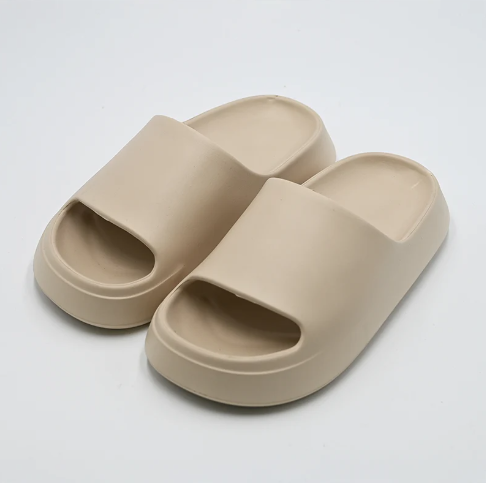
1. Material Comparison | Four Common Options at a Glance
| Material | Pros | Cons | Best For | Price Range |
|---|---|---|---|---|
| EVA (most common) | Lightweight, waterproof, odorless, good shape retention | Lower-end versions compress easily, may lose bounce | Daily home wear, bathroom use | $5–15 |
| PVC | Cheap, bright colors | Plastic smell, hardens in cold, potential phthalate risks | Not recommended (except premium brands) | $2–5 |
| Rubber | Excellent grip, very durable | Heavy, stiff, more expensive | Outdoor / indoor-outdoor use | $12–30 |
| EVA + Cork composite | Breathable, moisture-wicking, skin-friendly | Expensive, not for prolonged water exposure | Luxury gift, quiet luxury style | $25–60 |
One-sentence advice: Choose EVA for daily use, EVA with grip patterns for bathrooms, rubber soles for indoor-outdoor hybrid use, and cork composite if budget allows.
2. How to Judge Anti-Slip Performance | Look Beyond Tread Depth
Many buyers think deeper tread equals better grip. That is a common mistake.
Here's the correct three-step method:
| Factor | What to Look For | Passing Standard |
|---|---|---|
| Material | EVA has average grip; rubber is best | For bathroom use, choose rubber sole or EVA with anti-slip patch |
| Tread design | Not just depth — look for suction-cup patterns or multi-directional grooves | At least 3 different groove directions on the sole |
| Test report | Reputable brands provide wet static coefficient of friction | ≥ 0.40 = pass, ≥ 0.45 = excellent |
Warning: Many budget solid color slippers have completely flat soles for a "clean look." These are dangerous on wet tiles. Do not buy them.
3. Four DIY Tests | How to Tell Quality Without Tools
You don't need professional equipment. These four tests work at home.
| Test | How to Do It | Good Product | Bad Product |
|---|---|---|---|
| Smell | Open the package and sniff | No odor, or faint raw material smell | Sharp chemical/plastic smell (PVC or low-grade EVA) |
| Press | Press your thumb into the footbed | Noticeable bounce back, recovers quickly | Stays compressed, or feels like hard plastic |
| Fold | Fold the slipper in half | Bends without cracking, returns to shape | Won't bend, or leaves white marks/cracks |
| Color check | Compare both slippers in natural light | No color difference between left and right, even tone throughout | Visible color mismatch, or specks/bubbles on surface |
Special note: Color uniformity is the most visible quality indicator for solid color slippers. If you can see a color difference between the toe and heel, the dyeing process is poor. Return them.
4. Scene-by-Scene Selection Guide | Which Slipper for Where
| Scene | Material | Sole Type | Color Suggestion | Key Requirement |
|---|---|---|---|---|
| Bathroom / wet areas | EVA | Deep grooves + suction cups | Dark gray, navy (hide dirt) | Drain holes required, wet COF ≥ 0.40 |
| Daily home wear | EVA | Flat with grip texture | Oatmeal, cream yellow, misty blue | Thick sole (≥1 inch) for better comfort |
| Office / work from home | EVA + fabric lining | Quiet soft sole | Taupe, black | Silent walking, good for long sitting |
| Outdoor short trips (mail, dog walks) | Rubber outsole + EVA footbed | Durable outdoor tread | Black, olive green | Sole thickness ≥ 1.2 inches, prioritize durability |
| Gift / quiet luxury | EVA + cork composite | Cork + EVA双层 | Off-white, linen | Gift-ready packaging |
5. Cleaning & Care | 5 Tips to Extend Slipper Life
Solid color slippers show dirt easily, but improper cleaning shortens their life even faster.
| Issue | Wrong Way | Right Way |
|---|---|---|
| Surface stains | Hard brush (damages smooth layer) | Soft cloth + mild detergent, wipe gently |
| Yellowing / fading | Sun drying (UV accelerates yellowing) | Air dry in shade, avoid direct sunlight |
| Odors | Boiling water (deforms material) | Soak 15 min in 1:10 white vinegar-water mix, rinse |
| Flattening | Storing under heavy shoes | Stuff with paper to hold shape, store separately |
| Worn-out sole | Continuing to use on wet floors | Use only on dry surfaces, or replace |
Special reminders:
-
EVA is not heat-resistant. Do not use hot water or dry near radiators.
-
White EVA slippers naturally yellow over time due to oxidation. Choose off-white or oatmeal instead — they age better.
6. Quick Q&A
| Question | Answer |
|---|---|
| Why are solid color slippers often more expensive than printed ones? | Solid colors require higher material purity and tighter color control, with higher reject rates. |
| How often should I replace slippers? | Generally every 3–6 months. Replace when you see visible toe imprints, loss of bounce, or worn-out tread. |
| Why do some solid color slippers flatten within days? | Low-density EVA with poor foaming quality. Look for high-density EVA. |
| What should seniors or pregnant women look for? | ① Enclosed heel ② COF ≥ 0.45 ③ Thicker sole (better cushioning) ④ Avoid overly soft soles (less stable) |
| How can I test for poor dye quality at home? | Rub the surface firmly with a white damp paper towel. If color transfers, dye fastness is不合格. |
5 Keywords for Buying Solid Color Slippers
-
Smell – No odor is the first gate
-
Press – Good bounce = good EVA
-
Look – No color difference, no bubbles, even tone
-
Check – Ask for anti-slip test report (wet COF ≥ 0.40)
-
Care – Air dry, keep out of sun, don't crush, avoid heat
A good pair of solid color slippers doesn't shout for attention. But every time you put them on, you'll feel the difference.
(For bulk orders or product inquiries, contact us for samples.)