
- English
- Español
- Português
- русский
- Français
- 日本語
- Deutsch
- tiếng Việt
- Italiano
- Nederlands
- ภาษาไทย
- Polski
- 한국어
- Svenska
- magyar
- Malay
- বাংলা ভাষার
- Dansk
- Suomi
- हिन्दी
- Pilipino
- Türkçe
- Gaeilge
- العربية
- Indonesia
- Norsk
- تمل
- český
- ελληνικά
- український
- Javanese
- فارسی
- தமிழ்
- తెలుగు
- नेपाली
- Burmese
- български
- ລາວ
- Latine
- Қазақша
- Euskal
- Azərbaycan
- Slovenský jazyk
- Македонски
- Lietuvos
- Eesti Keel
- Română
- Slovenski
- मराठी
- Srpski језик
Why Do Bathroom Slippers Have Hollow Designs? The Science Behind Quick-Drying Footwear
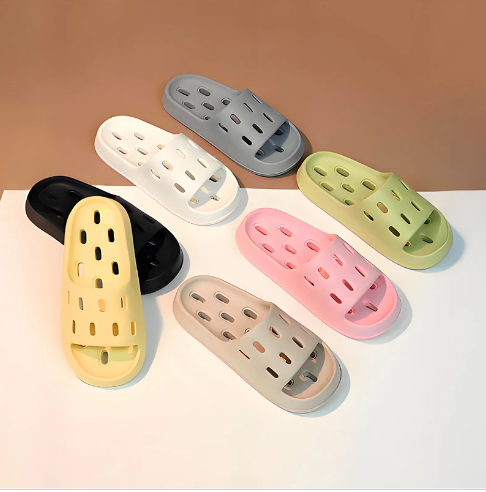
When people choose Bathroom Hollow Quick-drying Slippers, they may notice that many designs include small holes or hollow structures on the sole. At first glance, these openings may look like a simple style feature, but they actually solve several practical problems related to water drainage, drying speed, comfort, and hygiene.
A bathroom environment is different from ordinary indoor spaces. Floors are frequently exposed to water, humidity remains high, and footwear needs to dry quickly after use. This is why modern bathroom slippers are designed with special structures instead of using a completely solid sole.
So, why do bathroom slippers have hollow designs? The answer lies in the combination of material science and practical footwear engineering.
What Are Bathroom Hollow Quick-drying Slippers?
Bathroom Hollow Quick-drying Slippers are specially designed footwear products for wet environments such as bathrooms, showers, swimming pools, and household areas.
Unlike traditional slippers, these products usually feature:
- Hollow or perforated sole structures
- Water drainage channels
- Quick-drying materials
- Anti-slip patterns
- Lightweight construction
The purpose of these designs is to help water leave the slipper surface faster while improving wearing comfort in humid conditions.
Why Do Bathroom Slippers Need Hollow Designs?
The main reason is simple: water management.
When slippers are used in bathrooms, water can easily remain between the sole and the floor. If the structure cannot release moisture effectively, several problems may occur:
- Long drying time
- Uncomfortable wet feeling
- Increased odor risk
- Reduced hygiene
A hollow structure creates additional pathways for water movement, allowing moisture to escape instead of staying trapped.
How Does the Hollow Structure Make Slippers Dry Faster?
The quick-drying function comes from improved water flow and air circulation.
The working principle can be explained simply:
- Water enters the hollow channels
- The channels guide water away from the foot area
- Air can move through the structure
- Remaining moisture evaporates faster
Compared with a fully solid sole, a hollow design reduces areas where water can accumulate.
The Science Behind Water Drainage Design
The drainage performance of bathroom slippers depends on several design elements.
1. Drainage Holes
Small openings allow water to pass through quickly. The size and position of these holes affect how efficiently moisture can escape.
2. Sole Channel Design
Some slippers use special grooves or channels to guide water flow.
These structures help prevent water from staying under the foot and improve the overall drying process.
3. Air Circulation Space
Hollow areas create additional space inside the sole structure, allowing air movement and reducing moisture accumulation.
Why Do Ordinary Slippers Often Develop Odors?
Many people have experienced unpleasant smells from wet slippers. The main reason is not the water itself, but the environment created by trapped moisture.
The process often follows this pattern:
Water remains inside the slipper
↓
Slow drying creates a humid environment
↓
Microorganisms may grow more easily
↓
Unpleasant odors appear
Quick-drying designs help reduce moisture retention and improve daily hygiene.
The Role of Materials in Quick-drying Bathroom Slippers
Besides the hollow structure, material selection is also important.
EVA (Ethylene Vinyl Acetate)
EVA is one of the commonly used materials for bathroom slippers because it is lightweight, flexible, and water-resistant.
Its advantages include:
- Soft wearing feeling
- Low weight
- Good cushioning
- Easy cleaning
PVC (Polyvinyl Chloride)
PVC is another popular slipper material known for durability and water resistance.
It is often used in applications where stronger structural stability is needed.
Hollow Bathroom Slippers vs Traditional Solid Slippers
| Feature | Hollow Quick-drying Slippers | Traditional Solid Slippers |
|---|---|---|
| Water Drainage | Faster water release through channels | Water may remain on the surface |
| Drying Speed | Designed for quicker drying | Usually takes longer |
| Air Circulation | Improved through hollow structure | Limited airflow |
| Wet Environment Use | Suitable for bathrooms and pools | More suitable for dry areas |
| Comfort | Lightweight and flexible | Depends on material design |
Why Is Anti-slip Design Important for Bathroom Slippers?
Quick drying is only one part of bathroom slipper design. Safety is another important consideration.
Bathroom floors are often slippery because of water, so many slippers include textured soles to increase friction.
Anti-slip patterns help:
- Improve floor grip
- Increase walking stability
- Reduce slipping risks
Where Are Quick-drying Hollow Slippers Used?
These slippers are suitable for many wet environments, including:
- Home bathrooms
- Hotels
- Dormitories
- Swimming pools
- Spas
- Saunas
Why Are Quick-drying Bathroom Slippers Becoming Popular?
Modern consumers pay more attention to convenience, hygiene, and comfort.
Compared with traditional slippers, quick-drying designs provide benefits that match modern lifestyles:
- Easier daily cleaning
- Less moisture retention
- Better comfort in humid environments
- More practical home use experience
The Future Development of Bathroom Slipper Design
As materials and manufacturing technology continue to improve, future bathroom slippers may focus on:
- More efficient drainage structures
- Environmentally friendly materials
- Improved ergonomic designs
- Better anti-slip performance
- More personalized styles
Conclusion
The hollow design of bathroom slippers is not just a visual feature. It is a practical solution created to improve water drainage, drying speed, and daily hygiene.
By combining smart structural design with suitable materials such as EVA and PVC, modern quick-drying slippers provide better performance for wet environments.
The next time you see holes in a pair of bathroom slippers, remember that these small details are the result of careful design focused on comfort and functionality.